“Archeological materials from Latinoamérica have been found in wild, historic places across the Colorado Plateau… Wilderness reminds: Latinos have always belonged here and we always will.”
Olivia Juarez, Public Land Program Director for GreenLatinos in Salt Lake City, UT contributed this quote to Voices for Wilderness. This project brings our stories together to create policy that recognizes wilderness is part of who we are. Wild places across America’s red rock wilderness in southern Utah–Bears Ears National Monument, Grand Staircase-Escalante National Monument, the San Rafael Desert and more–impacts all of us, whether we realize it or not. Olivia explains more in this Q & A.
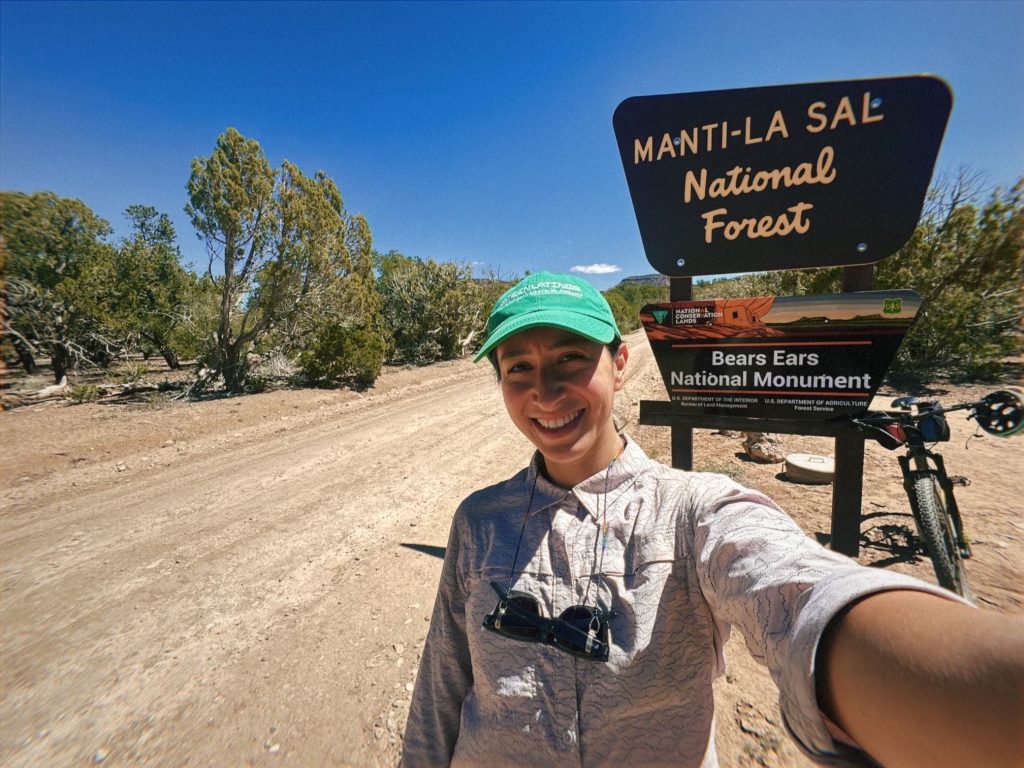
Olivia biking towards the Bears Ears buttes.
Why does wilderness matter to you?
Wilderness matters to me because wild places do not discriminate. They do not carry prejudice nor the intention to oppress. And wild places have the power to witness. Even when alone–maybe especially when alone in a remote, wild place–wilderness has a way of making you feel seen and accepted. Wilderness doesn’t misgender you. Wilderness doesn’t sexualize you. Wilderness humbles you. It reminds you of the “hum” in “human.” Wilderness is the ultimate expression of sovereignty and self-determination. Wild places offer piñon nuts and meat because they can. Miraculous juniper trees grow from wild canyon wall cracks 1,000 feet high, decorated with magnesium murals in geologic time scales because they can. Wilderness reflects the light of day, stars, and moon because they can. Wilderness matters because it is a reminder that true freedom is a natural disposition, but it is not unconditional. Wilderness teaches us that freedom is contingent upon relationship, reciprocity and responsibility.
Why does wilderness matter to your community?
The 250th anniversary of the signing of the Declaration of Independence, is also the 250th anniversary of the Domínguez-Escalante Expedition. With the guidance of Ute and Paiute tribe members, the party led by Silvestre Vélez de Escalante and Francisco Atanasio Domínguez became the first immigrants to see the Colorado Plateau and Great Basin in its natural state. The name Silvestre is also a word for “wild” in Spanish. The lands and waters encountered by the party which remain wild today allow people of all backgrounds to form a relationship with the natural heritage of the region; that natural heritage characterizes Hispanic heritage. Hispanic and Latino history is embedded in wilderness far earlier than the year 1776. Archeological materials from Latinoamérica like scarlet macaw feathers and bones, copper bells, and ceremonial cacao have been found in wild and historic places across the Colorado Plateau. This suggests that Indigenous peoples of the southwest had relationships with Mesoamericans: the ancestors of many current day Mexicans, Central Americans, and South Americans. Latino ancestors were part of the same historic world as Ancestral Puebloans–a world which we can know of because wild lands in the region have remained in their natural state. Wilderness reminds: Latinos have always belonged here and we always will.
What is a special experience you’ve had in red rock wilderness?
After graduating from the University of Utah, my now fiancé’s mom brought us on a five-night rafting trip down the Green River through Desolation and Gray Canyons in Utah. By this time my partner had already asked me to move in with him twice. Each time I declined, but he was undeterred. He planned on the power of water and wilderness for popping the question (again) on the riverside. Under twinkling stars, comforted by the sounds of the river, and freshly freed from academia, he asked, “will you move in with me?” I enthusiastically agreed. Less than two years later, the Emery County Public Land Management Act was signed into law ensuring that much of the Desolation Canyon Wilderness will remain just as it was on this special night.
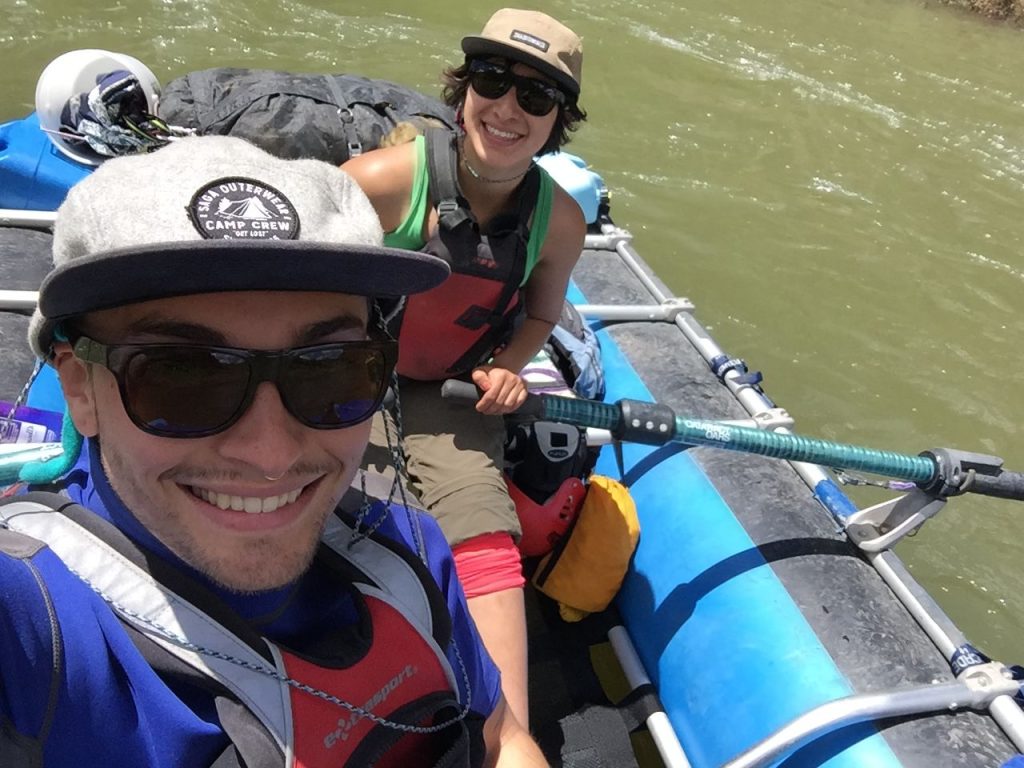
On the Green River.
What would be lost if we didn't have wild places?
We’d lose our culture, our heritage, our access to the outdoors, and our drinking water. Where I live in Salt Lake City (and across Utah), most drinking water comes from snowpack on wild public lands. Wilderness enhances snowpack health. If we didn’t have wild places protecting snowpack, most of my community wouldn’t be able to live in the Salt Lake Valley. Most cities and towns in Utah would become unaffordable and even dangerous to live in.
What do you wish more people understood?
I wish more people understood that going to wild places makes you feel better, and you don’t need fancy, expensive things to have a good experience in wilderness. My first hike in the Mount Olympus Wilderness was with my roommate. I was in an old pair of Converse All Stars with a water bottle and peanut butter banana sandwich. What mattered for that experience was not what I had, but who I was with. The hike was hard, but we encouraged each other, kept each other safe and left the wilderness feeling stronger and more confident. I’ll carry the memories we made together for the rest of my life.