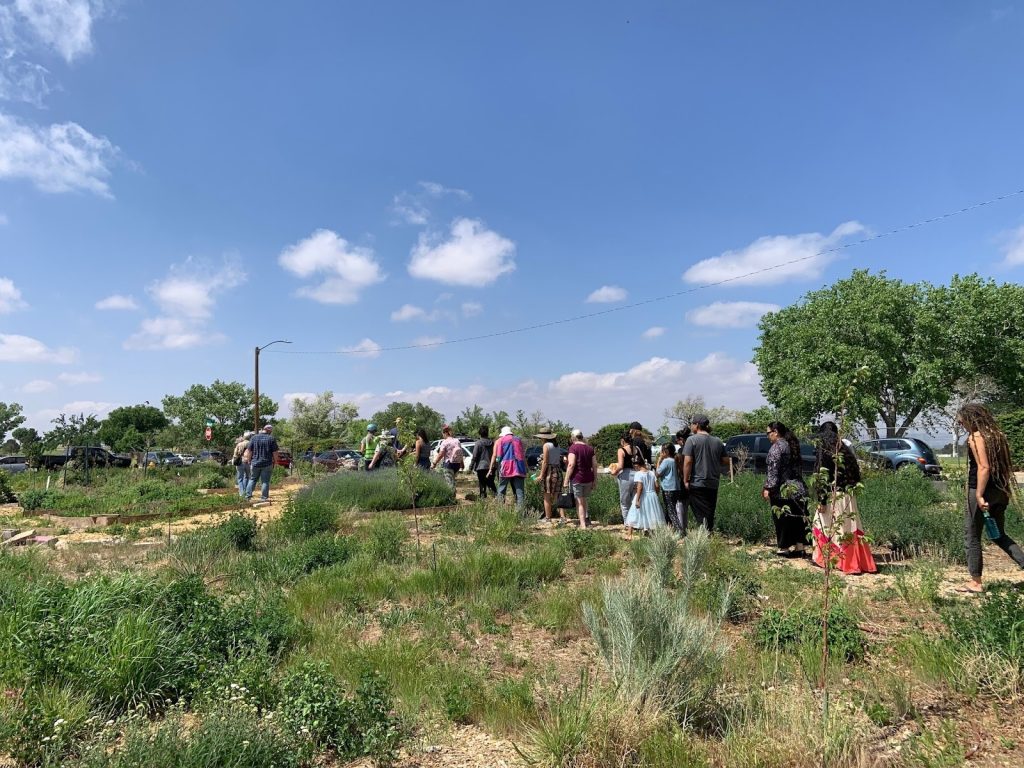
Tiendita

California

GreenLatinos is committed to building a California that meets the social, cultural, political, economic, and environmental needs of Latine, Indigenous, and other communities of color. Through advocacy at the local, state, and federal levels, we coordinate action, share resources, and conduct research to address our most pressing priorities.

Core Issues

Budget Advocacy

Budgets are moral documents. Historically, they have either deepened or alleviated the effects of disinvestment and environmental harm in nuestra comunidad. GreenLatinos engages our network in shaping state and federal budget processes—especially around reconciliation, appropriations, and resisting harmful rescissions.

Community-Oriented Research

Quantitative And qualitative data for Latine community issues is often lacking or out of reach for everyday community members. We seek to support innovative research and connect our network to up-to-date, accessible information for their every day and campaign priorities.

Nature Defense and Equitable Access to Nature

From the Sierra Nevadas to the deserts of Death Valley, California's ecosystems support some of the richest biodiversity in the country and provide vital services—like flood protection and carbon sequestion—to frontline communities. Yet due to a legacy of redlining and disinvestment, many Latine communities lack access to parks, public lands, and waterways. We envision a future where people and nature thrive together.

Climate Change and Extreme Weather

Latine communities are disproportionately affected by climate change and the polluting industries driving it. We work to protect Latines and farmworkers from extreme heat and weather while opposing false climate solutions that harm our communities.

Safe and Affordable Access to Drinking Water

In places like the San Joaquin Valley, many Latines still lack access to safe drinking water due to pollution and declining aquifers. Essential water infrastructure remains out of reach for low-income communities—we believe access to clean water is a basic human right.

Clean Air and Transportation Justice

Many of California's communities lack reliable, equitable transportation options. Car-dependent development and the placement of high-pollution transportation corridors in low-income neighborhoods contribute to environmental injustice and poor air quality in Latine communities.

California News & Events

ICE targeting Latino LA County park staff undermines community safety and access to parks

LOS ANGELES - Pedro Hernández, California State Program Manager for GreenLatinos, issued the following statement following the harassment of two Los Angeles County park staff at Whittier Narrows.

“Yesterday’s harassment of two Latino Los Angeles County Parks staff at Whittier Narrows Recreation Area is an unacceptable continuation of ICE’s activities. This incident is not isolated; there have been multiple reports of harassment involving state natural resource agency staff operating clearly marked vehicles. This disturbing trend represents an attempted reversal of years of advocacy that have worked to make equitable park access a priority in California. 

But we will not go back. All Californians—regardless of background—deserve to feel safe in our parks and in their communities, free from intimidation or fear. Despite these actions, GreenLatinos will continue to work to ensure our communities and green spaces remain safe, welcoming, and accessible for all.”

###

About GreenLatinos

GreenLatinos (NOTE: GreenLatinos is ONE WORD) is an active comunidad of Latino/a/e leaders, emboldened by the power and wisdom of our culture, united to demand equity and dismantle racism, resourced to win our environmental, conservation, and climate justice battles, and driven to secure our political, economic, cultural, and environmental liberation.

Read More
House Bipartisan Action Begins to Uphold Congressional Authority and Largely Rejects Trump Budget Cuts

FRESNO, California. - Pedro Hernández, California State Program Manager for GreenLatinos, issued the following statement following the U.S. House of Representatives’ approval of a package of three appropriations bills that fund the bulk of the federal government’s environmental protection and clean energy programs, including the Commerce–Justice–Science, Energy and Water Development, and Interior and Environment measures.

“The U.S. House of Representatives’ passage of this package of three appropriations bills is an important step toward protecting essential programs and staff that directly affect the health and economic stability of Latino communities across California. Bipartisan action to reject the most severe proposed cuts helps ensure that Congress—not the Trump administration—directs how taxpayer dollars are spent.

For Latino communities that have long borne the brunt of pollution and chronic underinvestment, advancing and safeguarding federal funding is not optional—it is critical. These investments support historic preservation, public lands, clean air and water, resilient infrastructure, and improved public health, while helping to address legacy environmental injustices. As this package moves to the Senate, it is essential that lawmakers continue to uphold strong funding levels and enforce guardrails that prevent the misuse or withholding of resources our communities depend on.”

###

About GreenLatinos

GreenLatinos (NOTE: GreenLatinos is ONE WORD) is an active comunidad of Latino/a/e leaders, emboldened by the power and wisdom of our culture, united to demand equity and dismantle racism, resourced to win our environmental, conservation, and climate justice battles, and driven to secure our political, economic, cultural, and environmental liberation.

Read More
Sembrando el Año Nuevo with GreenLatinos
Read More
Los votantes de California se unen en apoyo de la Proposición 50 para proteger sus derechos ambientales

PARA PUBLICACIÓN INMEDIATA:
11/06/25

CONTACTO DE PRENSA:
Edder Díaz Martínez,
Director de Comunicaciones
602-832-6039

Celebramos y reafirmamos nuestro compromiso de exigir cuentas a los funcionarios electos ante nuestras comunidades.

FRESNO, Calif. — A principios de esta semana, los votantes de California aprobaron de forma abrumadora la Proposición 50, reafirmando la protección de las comunidades latinas frente a la continua degradación ambiental y climática. Además, facilitará un mayor acceso a las tierras, océanos y aguas públicas, mejorando así el bienestar físico y mental de nuestras comunidades.

En reacción a los resultados de las elecciones del martes, el director del programa GreenLatinos California, Pedro Hernández, emite la siguiente declaración:

“Las elecciones de ayer reafirmaron que los latinos y los californianos se mantienen firmes en la defensa de sus derechos civiles, ambientales y humanos. Si bien nos tomamos un momento para celebrar esta fuerza colectiva, también debemos renovar nuestro compromiso de exigir cuentas a los funcionarios electos ante las comunidades a las que sirven. Mientras el país enfrenta el cierre de gobierno más largo de su historia, este momento nos recuerda que nuestra resiliencia y unidad son más importantes que nunca para construir un futuro justo y equitativo. - Pedro Hernández, Director del Programa de GreenLatinos California.

###

Acerca de GreenLatinos

GreenLatinos (NOTA: GreenLatinos es UNA SOLA PALABRA)Es una comunidad activa de líderes latinos/a/e, fortalecidos por el poder y la sabiduría de nuestra cultura, unidos para exigir equidad y desmantelar el racismo, con los recursos necesarios para ganar nuestras batallas por el medio ambiente, la conservación y la justicia climática, e impulsados a asegurar nuestra liberación política, económica, cultural y ambiental.

Read More
2025 California Ocean Day GreenLatinos Priorities
Read More
GreenLatinos celebra la aprobación de la EPA de la exención para los estándares de automóviles y camiones de California

WASHINGTON - La EPA de EE.UU. concedió las solicitudes del estado de California para exenciones de preferencia de la Ley de Aire Limpio para los estándares Advanced Clean Cars II (ACCII) y Heavy-Duty Low NOx Estándares Ómnibus (HDO). Estas normas tienen el potencial de proteger a millones de personas de la peligrosa contaminación emitida por los nuevos turismos, camiones y SUV, y por los nuevos camiones pesados, que son los mayores emisores de emisiones. 

La Ley de Aire Limpio incluye una disposición de exención de larga data que permite a California adoptar estándares de transporte limpio que son más estrictos que los estándares federales. Otros once estados (Colorado, Delaware, Maryland, Massachusetts, Nueva Jersey, Nuevo México, Nueva York, Oregón, Rhode Island, Vermont, Washington y el Distrito de Columbia) han adoptado los estándares ACCII. Junto con California, estas geografías representan el 33% del mercado de vehículos nuevos de Estados Unidos. Nueve de estos estados también han adoptado los estándares HDO.

En respuesta, la asesora de política, investigación y análisis de datos de GreenLatinos, Andrea Marpillero-Colomina, PhD., emitió la siguiente declaración:

“Celebramos que la EPA haya dado este paso crucial para proteger a millones de personas de los impactos dañinos de la contaminación vehicular, aunque sea en el último momento de la administración, después de que a principios de este año se finalizaran regulaciones federales menos inspiradoras. Esta es una victoria importante para las poblaciones más afectadas por la contaminación; Las comunidades latinas tienen más probabilidades de vivir en “zonas de muerte del diésel”, donde las emisiones de los camiones crean un mayor riesgo de enfermedades pulmonares, asma y cáncer. Los niños latinos visitan la sala de emergencias debido al asma al doble que los niños blancos no hispanos y tienen un 40% más de probabilidades de morir de asma.

Ahora que la EPA ha aprobado estas exenciones clave, California y los demás estados que han adoptado las normas ACCII y HDO pueden perseguir sus objetivos de reducir la contaminación del aire procedente de los vehículos y proteger a las comunidades de daños; salvar vidas, mejorar los resultados de salud y proteger el futuro de este planeta”.

###

Acerca de GreenLatinos

GreenLatinos (NOTA: GreenLatinos es UNA PALABRA) es una comunidad activa de líderes latinos, envalentonados por el poder y la sabiduría de nuestra cultura, unidos para exigir equidad y desmantelar el racismo, con recursos para ganar nuestras batallas ambientales, de conservación y de justicia climática, y motivados para asegurar nuestras políticas, Liberación económica, cultural y ambiental.  

Read More
GreenLatinos Celebrates EPA Approving Waiver for California Cars and Trucks Standards

WASHINGTON - The U.S. EPA granted the state of California’s requests for Clean Air Act preemption waivers for the Advanced Clean Cars II (ACCII) Standards and the Heavy-Duty Low NOx Omnibus (HDO) Standards. These standards have the potential to protect millions of people from dangerous pollution emitted by new passenger cars, trucks and SUVs, and from new heavy-duty trucks, which are the biggest emissions emitters. 

The Clean Air Act includes a longstanding waiver provision allowing California to adopt clean transportation standards that are stronger than federal standards. Eleven other states – Colorado, Delaware, Maryland, Massachusetts, New Jersey, New Mexico, New York, Oregon, Rhode Island, Vermont, Washington, and the District of Columbia – have adopted ACCII standards. Together with California, these geographies make up 33% of the U.S. new vehicle market. Nine of these states have also adopted the HDO Standards.

In response, GreenLatinos Policy, Research + Data Analytics Advisor Andrea Marpillero-Colomina, PhD., issued the following statement:

“We celebrate EPA taking this crucial step to protect millions of people from the harmful impacts of vehicle pollution, albeit at the Administration’s 11th hour, after less inspiring federal rulemakings were finalized earlier this year. This is an important win for the most pollution burdened populations; Latino/e communities are more likely to live in ‘diesel death zones’ where truck emissions create greater risk of lung disease, asthma, and cancer. Latino/e children visit the ER due to asthma at twice the rate of non-Hispanic white children and are 40% more likely to die from asthma.

Now that EPA has approved these key waivers, California and the other states that have adopted ACCII and HDO rules can pursue their goals to reduce air pollution from vehicles and protect communities from harm; saving lives, improving health outcomes, and protecting the future of this planet.”

###

About GreenLatinos

GreenLatinos (NOTE: GreenLatinos is ONE WORD) is an active comunidad of Latino/a/e leaders, emboldened by the power and wisdom of our culture, united to demand equity and dismantle racism, resourced to win our environmental, conservation, and climate justice battles, and driven to secure our political, economic, cultural, and environmental liberation.  

Read More
California’s San Joaquin Valley: A Land of Extremes

This October I was invited to speak at the UC Berkeley Energy and Resources Collaborative Fall Symposium to discuss environmental justice and water access in California’s San Joaquin Valley. As a lifelong resident of the Valley and graduate of UC Berkeley, it presented an opportunity to connect my professional expertise with my valuable lived experience. 

Now more than ever, places like California’s San Joaquin Valley provide insight into understanding the US Southwest and the challenges posed by intense water insecurity - resulting in many cascading impacts for people, the environment, and the economy.

To this effect, the San Joaquin Valley is a land of extremes.

The San Joaquin Valley exists in the very center of California where it serves as the state's most fertile and agriculturally productive regions. Most of the nation’s agricultural produce is grown here but this same food system is the heart of severe environmental injustices which disproportionately affect the region’s significant Latino population, which makes up nearly 50% of the total population in the region’s eight counties. 

Despite record agricultural productivity, many San Joaquin Valley residents suffer from severe economic hardship, limited access to healthcare, and inadequate housing which only further exacerbate the impacts from air pollution, water contamination, extreme heat, and pesticide exposure. 

As somewhere with extreme conservative political leanings in a state that is widely known as a liberal paradise. While the Valley faces unprecedented water and agricultural stressors, it remains an unparalleled pillar of California’s ethnic diversity and biodiversity. And in the face of  injustice and environmental collapse the San Joaquin Valley is home to some of the most innovative nature-based solutions and social justice champions including but certainly not limited to Cesar Chavez and Dolores Huerta. 

Yet, this region of extremes is largely invisible to the general population.

WATER: SOURCE OF LIFE, CAUSE OF CONFLICT

The extremes in question can be understood through the history of water. 

San Joaquin Valley hydrology is governed by its headwaters located eastward toward the Sierra Nevadas, home of the world-renowned public lands such as Yosemite National Park, and stretches west to the coastal mountains. From north to south, concrete lined canals deliver surface water to the water-scare southern California. 


Historically, annual floods produced a vast network of wetlands and created the Tule Lake - the largest body of freshwater east of the Mississippi. Centuries of flooding and uninterrupted water flows seeped through the soil to replenish the subsurface with deep groundwater reserves. It was once the case that floods would inundate the region so profoundly that many could boat as far as the San Francisco Bay area. Even the state capital of Sacramento was flooded in 1862.

Yet through the onset of white settlement in the mid-to late 1800s, the hydrological foundation began a seismic shift towards ecological collapse. Fertile soils were the draw of government-sponsored westward settlement. Genocide of indigenous tribes and new technology changed the San Jaoquin Valley’s hydrology forever. 

Rivers were rerouted, land was privatized, and large-scale, extractive corporate agriculture converted wildlife habitat on such a magnitude that many claim it is this region represents the “largest human alteration of the Earth’s surface”. Some studies further estimate that the San Joaquin Valley has lost over 90 percent of its grasslands, wetlands, floodplain, and riparian woodlands. 

The resulting disconnected habitats drove several species into extinction, and continues to imperil existing wildlife including, but not limited to,the Fresno Kangaroo Rat, Kit Fox, and Delta Smelt. The region also serves as a critical segment of the Pacific Flyway, hosting 60 percent of the wintering waterfowl and 20 percent of the waterfowl population in the entire United States. 

Growing Crops and Growing Inequities 

The confluence of issues have resulted in the environment and communities of color, Latinos in particular, being impacted most severely today. 
All of this came to a head following two decades of consecutive droughts in the twenty first century where dozens of disadvantaged unincorporated communities and the remaining slivers of habitat went without water. The shortage of surface water supplies fostered an intense over-dependence on groundwater leading to never-before-seen rates of depletion and the literal sinking of the valley floor at a rate of an inch per year.

The economic inequality of the region exacerbated the inability to locally develop drinking water infrastructure such as new, deeper wells and water filtration systems. In addition to the general unavailability of water, it was later shown that drought also contributed to disproportionate impacts of water pollution. In the context of modern water scarcity challenges Latinos were affected first, affected the hardest, and affected the longest. Predominantly rural Latino communities like Cantua Creek are stressed by water infrastructure debt, polluted drinking water, and inhumane unaffordable water prices for years.

Moreover, the drought worsened the Latino community’s disproportionate lack of access to healthy, resilient green spaces and to the many benefits of nature. The Hispanic Access Foundation has found that Latinos and other communities of color in the US are three times as likely to live somewhere that is “nature deprived” than white communities. The extreme lack of water, municipal water restrictions, and increased cost of water exacerbated the “nature gap” across the region. 

The aforementioned habitat conversion resulted in “park poor” communities that were surrounded by agriculture and other facilities that have caused a net loss in biodiversity such as Fresno’s Amazon Distribution Center. Latinos and people of color disproportionately reside in these communities due to the historic redlining that occurred in the region. Many communities were explicitly identified as areas to withhold investment in basic community infrastructure such as drinking water systems, housing, and community parks as was the case in the 1971 Tulare County General Plan and the 1972 Kern County Housing Element. 

Because there are a lack of parks and protected public lands on the San Joaquin Valley Floor, peoples’ homes and yards were the only green areas available but many yards went fallow and dry throughout the drought.

Furthermore, even the region’s public lands, which have the highest forms of federal environmental protections were adversely impacted by the drought. The headwaters of the Sierra Mountains were drought-stricken, resulting in water being absorbed into the mountainside that would otherwise reach the valley floor under normal conditions. 

Down on the valley floor where pockets of the National Wildlife Refuge System offer a last stand for imperiled species, the wells that refuges rely on to maintain their wetland ecosystems could not reach the declining groundwater levels. National refuge water demand was out competed by farmers and under-prioritized by California’s water rights system which meant that they also were not receiving their federal water allocations.

REIMAGINING SOLUTIONS 

As desperate as the challenges may seem, there remain many examples of  innovative solutions that have set precedent across the country.

It was San Joaquin Valley residents that led statewide efforts to address the disproportionate impact of water insecurity on Latinos by creating the Safe and Affordable Drinking Water Fund - the nation’s first drinking water funding program which will implement California’s “Human Right to Water”. Many of the same advocates were instrumental in the passage of the Sustainable Groundwater Management Act in the California legislature which was also the nation’s first effort to prevent adverse impacts from the overuse of groundwater supplies. 

San Joaquin Valley residents were integral in setting national precedent for nature protection through advocating to ensure California was the first state in the nation to advance the 30x30 movement to address the climate and biodiversity loss crisis by conserving at least 30% of lands and watts by the year 2030. This has contributed to various national monuments being expanded and the creation of the first state park in over a decade within the San Joaquin Valley.

Additionally, there are many organizations such as Latino Outdoors and Justice Outside who act to promote local outdoor enjoyment and environmental policy influence among underrepresented communities and connect workers to environmental sector employment opportunities, most notably through the Outdoor Educators Institute which has a Fresno area cohort. 

In the land of extremes, a dark history turns toward an increasingly bright future. 

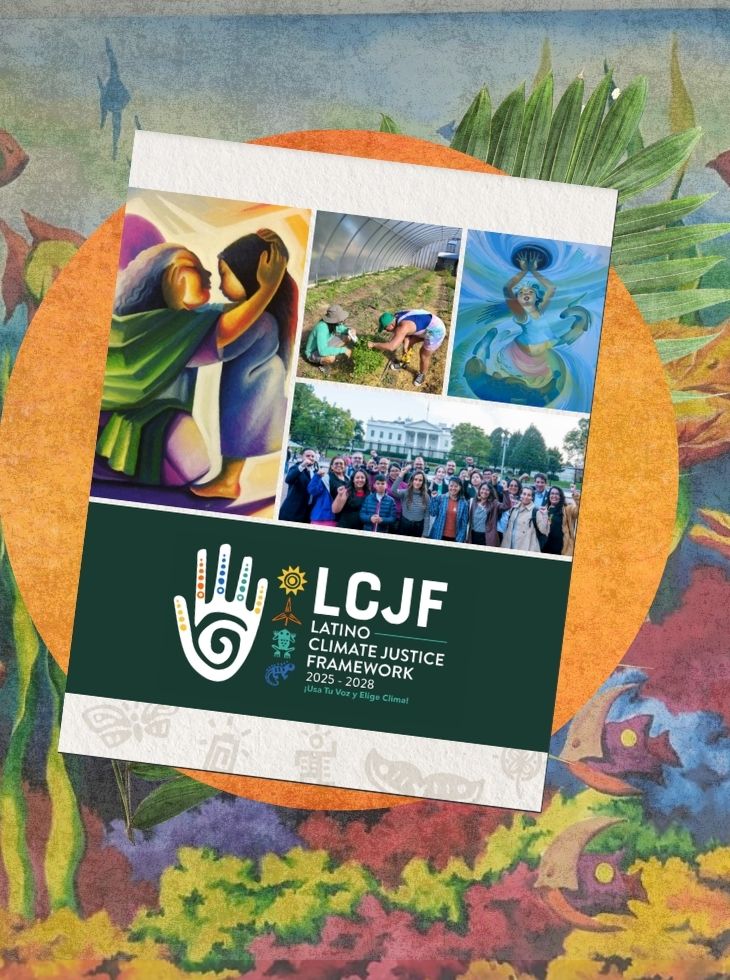
While many of the injustices faced nationally by Latinos are found in the San Joaquin Valley, many of the solutions to these issues are found in the GreenLatinos’ updated Latino Climate Justice Framework (LCJF). For the next four years, the LCJF will guide GreenLatinos’ strategic national and state-level advocacy to advance our mission of environmental liberation for all marginalized communities. 

Read More
California
Read More