For years, many water and ocean advocates have warned about the dangers of plastic pollution in our oceans, rivers, and communities. Today, a growing body of research suggests the problem with plastics extends far beyond visible litter. Tiny plastic particles known as microplastics are now being found in drinking water, food, household products, and even within the human body.
What was once viewed primarily as an environmental issue is increasingly being recognized as a public health challenge.
Recent media reports have highlighted how everyday kitchen items, including plastic food containers, cutting boards, food packaging, and cooking utensils, may contribute to microplastic exposure. These findings underscore a troubling reality: plastics are not only polluting our environment, but they are also becoming embedded in our daily lives.
GreenLatinos recently launched PVCwatch.org to compile information as it relates to microplastics and vinyl chloride, a key chemical used to make PVC (polyvinyl chloride), which has been linked to a range of health impacts, including high risks of liver, brain, and lung cancers. Our communities need to understand the full picture around the threat we face from plastics.
The connection between microplastics and PVC pollution highlights a broader public health and environmental justice issue: communities are exposed to plastics throughout the entire length of usage of these materials,from production,consumption, and disposal. Furthermore, environmental contamination is a potential risk throughout said timeline.
Environmental justice and frontline communities are often disproportionately affected. Manufacturing facilities, chemical plants, and waste disposal sites are frequently located near low-income communities and communities of color, raising concerns about cumulative exposure to pollution and toxic chemicals. (As You Sow)
This is why public education initiatives such as PVC Watch are so critical. PVC Watch was launched to help communities better understand the relationship between PVC, water quality, public health, and environmental protection.
By increasing transparency and awareness, advocates can empower residents, policymakers, and businesses to make informed decisions about safer materials and sustainable alternatives.
Protecting our water, reducing plastic pollution, and promoting healthier communities will require action at every level. Policymakers should continue evaluating the risks associated with microplastics and plastic-related chemicals. Companies should invest in safer alternatives and more sustainable materials. Consumers can reduce unnecessary plastic use and support products that minimize environmental harm.
The conversation around plastics can no longer focus solely on waste management but must also address human health, environmental justice, and the long-term sustainability of our communities.
Microplastics may be tiny, but their implications for our environment and public health are enormous.
Visit PVCWatch.org to learn more about the dangers of PVC and other harmful microplastics.
On May 4, 2026 Box Elder County, UT commissioners unanimously approved two resolutions in support of a 40,000-acre Stratos data center for the Military Installation Development Authority. The data center proposal now moves into a phase of environmental analysis. Its construction would undermine a natural ecosystem known for irreplaceable wildlife habitat and known to have numerous sacred, historic sites including a nearby Native American burial ground. On May 5, GreenLatinos filed a formal protest of the water rights application that would divert 1,900 acre feet of water from the Salt Wells Spring Stream to the Stratos project. The water right application was cancelled following thousands of protests filed, but Stratos will continue to push this devastating project along.
Climate Pollution
The Stratos data center, famously advanced by Shark Tank investor Kevin O’Leary, would require more than double the electricity consumed by the entire state of Utah in a year, and is proposed to be powered by a remote on-site methane gas plant. The methane plant would need to produce 9 gigawatts of power and would raise the total greenhouse gas emissions from within the state of Utah by about 50%. This is more emissions than from every vehicle on Utah roads combined.
Extreme Heat
With a footprint larger than most Utah towns, the data center could produce an extreme urban heat island effect. An increase of 3-5 degrees fahrenheit would disrupt storm systems in the region and potentially affect weather elsewhere. The 2025-2026 winter season left Utah with only 19% of normal snowpack, a devastating blow to Utah’s number one drinking water source, rivers, and lakes including the ailing Great Salt Lake. Any further disruption of local climate patterns could exacerbate extreme heat disproportionately affecting Utah’s communities of color and harm water access for everyone.
Water
Stratos would need to ultimately purchase 3,000 acre‑feet of water rights on‑site and have 10,000 acre‑feet under contract elsewhere to operate this center. This is more than enough water for over 20,000 households. A loss of 1,900 acre feet from Salt Wells stream was in direct conflict with the state of Utah’s responsibility to steward the Locomotive Springs Wildlife Management Area wetlands and its commitment to restore water levels at Great Salt Lake by 2034.
Public Health
Great Salt Lake is the continent’s largest saline lake, providing critical habitat, nesting and feeding grounds for internationally significant avian species. Increasing climate pollution has spurred ongoing severe drought and heat in the region, leading to declining and historically low water levels at the lake–a deadly failure.
Generations of industrial pollution on the playas of Great Salt Lake has resulted in toxic heavy metals, pathogens, and industrial chemicals depositing into the lake water and playas. With less water, and more exposed, polluted dry land, these toxins become airborne with winds as low as 10 mph. Short and long term exposure to dust and toxic particulate matter is associated with respiratory disease, cardiovascular disease, infertility, fetal development impairment, infant mortality, cancer, higher blood pressure, arthritis, juvenile arthritis, premature death, and other morbidity and mortality issues. The majority of Utah’s Hispanic/ Latino residents breathe in the air shed normally protected by Great Salt Lake. The construction of the Stratos data center would effectively deal the killing blow to Great Salt Lake and be responsible for more persistent, deadly dust events.
How You Can Help
GreenLatinos will be monitoring this unpopular proposal as it develops. To get involved, donate to GreenLatinos so we can sustain active opposition to this data center and/or volunteer with GreenLatinos to support our organizing power. If you represent a business, organization, religious institution, club or any other organized body of people, sign on to the Data Center Moratorium Now! national sign on letter.
FOR IMMEDIATE RELEASE: 04/22/2026
MEDIA CONTACT: Edder Díaz Martínez, Communications Director, 602-832-6039, [email protected]
New resource spotlights vinyl chloride health risks and water contamination as federal regulators designate microplastics a priority drinking water concern for the first time
WASHINGTON — Plastic is everywhere—in food packaging, medical devices, and even cosmetics. While chemical companies often promote plastic as a cheap and durable material, many plastics pose serious health risks. One of the most concerning is vinyl chloride, a key chemical used to make PVC (polyvinyl chloride), which has been linked to a range of health impacts, including increased risks of liver, brain, and lung cancers.
The launch of pvcwatch.org coincides with growing federal recognition of the plastics crisis. On April 2, the EPA for the first time designated microplastics as a priority contaminant group in its draft Sixth Contaminant Candidate List under the Safe Drinking Water Act – a step the agency called “historic” and which opens a 60-day public comment period through June 1.
This Earth Month, GreenLatinos is spotlighting the harmful impacts of PVC and microplastics through pvcwatch.org, a new educational resource dedicated to raising awareness about the health and environmental dangers associated with PVC and related chemicals.
The website includes:
Environmental advocates, public health experts, and community leaders alike are increasingly concerned about the growing body of evidence linking PVC to harm. This issue is also gaining attention among parents and caregivers seeking to reduce toxic exposures in their homes.
GreenLatinos is particularly concerned about the disproportionate impact on Latino/a/e communities, many of which are located near industrial and petrochemical facilities and face elevated exposure risks as a result.
“Having resources like PVCWatch.org provides our communities with the necessary information about vinyl chloride and other chemicals used in plastic production. The risk map highlights that this is a widespread issue affecting communities across the United States. As we address our country’s aging water infrastructure, we must ensure that infrastructure solutions do not create new burdens for communities already living near plastic production facilities.” - Dr. Val Schull, GreenLatinos Water & Ocean Program Director
###
About GreenLatinos
NOTE: GreenLatinos is ONE WORD. GreenLatinos convenes an active comunidad of environmental, conservation, and climate justice leaders rooted in the power and wisdom of our culture, united to uplift our priorities, and driven to secure our political, economic, cultural, and environmental liberation.
GreenLatinos (NOTA: GreenLatinos es UNA PALABRA) es una comunidad activa de líderes latinos/a/e, envalentonados por el poder y la sabiduría de nuestra cultura, unidos para exigir equidad y desmantelar el racismo, con recursos para ganar nuestra justicia ambiental, batallas de conservación, climáticas e impulsados a asegurar nuestra liberación política, económica, cultural y ambiental.
Lo que se podría hacer en tierras públicas con $75 mil millones
H.R. 1 allocated $75 billion for Immigration and Customs Enforcement (ICE). Here’s what that funding could be used for instead:
There is more than enough to go around for our communities. Congress has rescinded appropriated funding before; they have the ability to do it again. This could be America’s next best idea!
H.R. 1 asignó $75 mil milones para ICE. Esto es lo qué se podría usar con esa financiación:
Hay fondos más que suficientes para todos nosotros. El Congreso ha revocado fondos asignados anteriormente y tienen la capacidad de hacerlo de nuevo. ¡Esta podría ser la próxima mejor idea de América!
Make your GreenLatinos Membership official. JOIN TODAY.
En comunidad,
Dr. Val, Olivia, Dr. Camila y Pedro
GreenLatinos Public Land and Ocean Colectivo
Water Quality / Calidad de Agua
Get Involved! || ¡Involúcrese!

The Environmental Protection Agency announced a proposed rule to revise the existing Section 401 water quality certification regulations. The EPA is accepting public comments here until February 17, 2026.
La Agencia de Protección Ambiental (EPA) anunció una propuesta de norma para revisar las regulaciones existentes sobre la certificación de calidad del agua de la Sección 401. La EPA está recibiendo comentarios del público aquí hasta el 17 de febrero de 2026.
Proposed oil and gas management in CA / Propuesta de gestión de petróleo y gas en California

The Bureau of Land Management is seeking public comments on proposed management updates for oil and gas leasing and development on public lands in Alameda, Contra Costa, Monterey, San Benito, San Mateo, Santa Clara, and Santa Cruz counties, and portions of Fresno, Merced, and San Joaquin counties. The comment period will close March 6, 2026.
La Oficina de Administración de Tierras (Bureau of Land Management) solicita comentarios del público sobre las actualizaciones propuestas para la gestión del arrendamiento y desarrollo de petróleo y gas en tierras públicas de los condados de Alameda, Contra Costa, Monterey, San Benito, San Mateo, Santa Clara y Santa Cruz, así como en partes de los condados de Fresno, Merced y San Joaquín. El plazo para presentar comentarios finaliza el 6 de marzo de 2026.
Polluter Pearce Will Sell Out Nuestras Communidades / El contaminador Pearce traicionará a nuestras comunidades

Former NM Rep. “Sell Off Steve” Pearce will soon go before the Senate for consideration to be Director of the Bureau of Land Management (BLM). This is the national agency that oversees healthier air, cleaner drinking water, and safer access to nature now and for future generations. Residents and voters in NV, CA, AZ, and NM, por favor manda a tus Senadores: oppose Polluter Pearce!
El exrepresentante de Nuevo México, Steve Pearce, conocido como “Steve el Vendepatrias”, aparecerá pronto ante el Senado para su confirmación como director de la Oficina de Administración de Tierras (BLM). Esta es la agencia nacional con la mayor responsabilidad de proporcionar aire limpio, agua potable y acceso más seguro a la naturaleza, ahora y para las generaciones futuras. Residentes y votantes de Nevada, California, Arizona y Nuevo México, por favor, pidan a sus senadores que se opongan a Pearce, el contaminador.
When they go low, we go high / Cuando ellos bajan el nivel, nosotros lo subimos

This is the first year that Rev. Dr. MLK Jr. Day of Service was not observed as a free national park & recreation land entrance day. Pero nuestras comunidades carried on MLK’s legacy conducting dozens of service projects in parks and public lands. Keep talking about how unpopular Interior Secretary Burgum’s national park fee and lack of free entrance day scheme is with our kit. Next big day is Juneteenth.
Este es el primer año en que el Día de Servicio del Reverendo Dr. MLK Jr. no se celebró con entrada gratuita a los parques y terrenos recreativos nacionales. Pero nuestras comunidades continuaron el legado de MLK realizando docenas de proyectos en parques y terrenos públicos. Sigan discutiendo el plan del Secretario del Interior Burgum de tarifas en los parques nacionales y durante los supuestos días de entrada gratuita con este kit. El próximo día clave es el Juneteenth.
Take Action to Defend Grand Staircase-Escalante National Monument / ¡Defienda el monumento nacional Grand Staircase-Escalante!
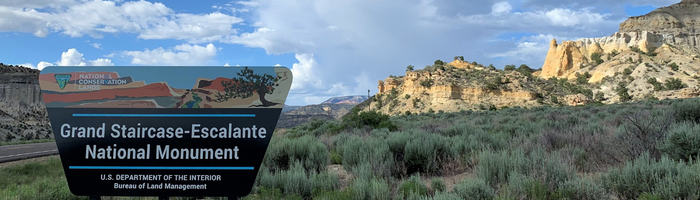
There’s no way to sugarcoat it: Grand Staircase-Escalante National Monument is under attack (once again) by Utah’s congressional delegation. They aim to permanently undo the existing Monument Management Plan, undermining the leadership of the Grand Staircase-Escalante Inter-Tribal Coalition. Tell your Congress members to oppose it! Here’s a toolkit to grow support for the Monument with your network.
Lo diremos sin rodeos: el Monumento Nacional Grand Staircase Escalante está bajo ataque (otra vez) por la delegación congregacional de Utah. Pretenden deshacer permanentemente el Plan de Gestión del Monumento existente, socavando el liderazgo de la Coalición Intertribal Grand Staircase-Escalante. ¡Dígale a sus congresistas que se opongan! Por favor use este kit de herramientas para aumentar el apoyo al Monumento en su red social.
News and Research || Noticias e Investigaciones
USA withdraws from IUCN and 65 other international organizations / Estados Unidos se retira de 66 organizaciones internacionales
President Trump has ordered a sweeping withdrawal from international environmental agreements, including the UN Framework Convention on Climate Change and UN-Oceans. The move removes official U.S. engagement on global ocean and climate collaboration.
El presidente Trump ha ordenado una retirada de acuerdos ambientales internacionales, incluida la Convención Marco de las Naciones Unidas sobre el Cambio Climático y ONU-Océanos. Esta decisión pone fin a la participación oficial de Estados Unidos en la colaboración global en materia de océanos y clima.
More than 75,000 petitions and letters opposing deep sea mining / Más de 75.000 peticiones y cartas contra la minería en aguas profundas

More than 75,000 petitions, letters, and comments in opposition to the Trump administration’s plans to allow deep-sea mining near the Mariana Trench have been collected from Guam and the Commonwealth of the Northern Mariana Islands during a 60-day comment period. This highlights the importance of community engagement and partnership, as well as how community-led groups rally to ensure their voices are heard.
Se han recopilado más de 75.000 peticiones, cartas y comentarios en oposición a los planes de la administración Trump de permitir la minería en aguas profundas cerca de la Fosa de las Marianas en Guam y la Commonwealth de las Islas Marianas del Norte durante un período de comentarios de 60 días. Esto resalta la importancia de la participación y la asociación de la comunidad, así como también cómo los grupos liderados por la comunidad se unen para garantizar que sus voces sean escuchadas.
Policy Updates || Actualizaciones de Política
Environmental Justice Screening Tool Act / Ley de Herramientas de Evaluación de la Justicia Ambiental

The Environmental Justice Screening Tool Act (H.R.6815) directs the EPA to re-establish a public screening tool to identify communities disproportionately affected by pollution in order to better inform federal funding and policy decisions. Until it is restored, the EPA EJ Screen can be accessed by the Public Environmental Data Partners.
La Ley de Herramientas de Evaluación de la Justicia Ambiental (H.R.6815) ordena a la EPA que restablezca una herramienta de evaluación pública para identificar las comunidades afectadas de manera desproporcionada por la contaminación, con el fin de fundamentar mejor las decisiones sobre financiación y políticas federales. Hasta que se restablezca, la herramienta EPA EJ Screen está disponible para todos gracias a los socios de datos ambientales públicos.
Congress Rejects Administration's Proposed Science Cuts/ El Congreso rechaza los recortes científicos propuestos por la administración

At the beginning of the year, the House passed a three-bill FY26 funding package covering Commerce–Justice–Science (CJS), Interior–Environment, and Energy–Water. The bill package largely rejects the administration’s proposed cuts to science and research and puts guardrails to curb the administration from withholding funds. The Senate advanced the package, and was signed into law at the end of January.
Al principio del año, la Cámara aprobó un paquete de financiación de tres proyectos de ley para el año fiscal 26 que cubre Comercio-Justicia-Ciencia (CJS), Interior-Medio ambiente y Energía-Agua. El paquete de ley rechaza en gran medida los recortes propuestos por la administración a la ciencia y la investigación y pone barreras para impedir que la administración retenga fondos. El Senado adelantó el paquete, y fue firmado como ley al fin de enero.
Nature Feature || Enfoque sobre naturaleza:
Penguins| Pingüinos

Like Valentine sweethearts, Antarctic penguins form devoted relationships, many mating for life. They propose with pebbles, share parenting, and can even recognize partners’ voices. Yet, melting ice threatens their love stories - learn more from PBS NewsHour here.
Al igual que las parejas de enamorados en San Valentín, los pingüinos antárticos forman relaciones muy sólidas, y muchos se aparean de por vida. Se declaran su amor con piedrecitas, comparten la crianza de sus crías e incluso pueden reconocer la voz de su pareja. Sin embargo, el deshielo amenaza sus historias de amor - descubra más en PBS NewsHour aquí.
Connect with GreenLatinos || Conéctese con GreenLatinos
🦋 Sigue GreenLatinos on Bluesky 🦋
Showcase your priorities in our next newsletter! Muestre sus prioridades en nuestro próximo boletín!
As explained in a recently released letter describing its position, CDPHE “determined that it is not appropriate to use the mass balance credit method with free allocation - fuel exclusion when calculating [Post-consumer Recycled Content] PCR content” as it “does not verify the actual PCR content contained within a material” in the Producer Responsibility for Paper and Packaging program (HB 22-1355). This momentous Colorado decision can be an example for other states and countries to disallow ‘free allocation’ mass balance accounting — a type of greenwashing accounting method and false advertising corporations use to increase their profit margins and mislead consumers about the actual recycled content of the products they purchase.
The Colorado State Advisory Board deliberated for months over the question of whether to allow this controversial accounting method, ultimately issuing a statement of concern. CDPHE subsequently made an official determination that "free allocation" isn't compliant with state law.
“We are elated by this decision to remove greenwashing from recycling methods. All communities must be protected from hazardous and toxic industries that pollute our environment,” said Brian Loma, Hazardous Materials and Waste Diversion Advocate at GreenLatinos Colorado. “GreenLatinos, along with our partner organizations, are excited to celebrate this significant decision by the Colorado Department of Public Health and Environment and hope that this decision will have a positive impact on communities nationwide and around the world. We continue to do everything we can to educate our members, partners, and other consumers about the dangers corporations cause when intentionally using greenwashing methods to deceive consumers.”
"Colorado just took an important step towards ending a little-known but highly consequential corporate greenwashing scheme for recycled plastic. While there is still more that needs to be done, communities and consumers throughout the state will breathe easier because of this decision,” said Renée Sharp, Director of Plastics and Petrochemical Advocacy, Natural Resources Defense Council (NRDC).
"People have an understanding of what recycling plastic looks like and what recycled content means. Free allocation mass balance uses opaque accounting methods that mislead consumers,” said Jessica Roff, Plastics and Petrochemicals Program Manager at GAIA. “Colorado listened to environmental justice groups, residents, and experts, and made the right decision to stop industry from using this method of greenwashing harmful practices that are not actually recycling. This is a great first step, and we hope other municipalities will follow suit and then all will keep improving."
“As a mission-based recycling organization, we see this decision as a win for transparent and reliable recycling. The public made it clear that unverifiable accounting practices have no place in our system. By rejecting these approaches, the State helps ensure that Colorado’s recycling system remains something people can trust,” said Rachel Setzke, Senior Policy Advisor at Eco-Cycle.
“I was thrilled with this important decision by CDPHE,” said State Senator Lisa Cutter, sponsor of HB22-1355. “Burning plastics for fuel is an inefficient and unproven method of recycling plastics, exposing the communities where these plants are located to extremely hazardous air quality. We must not leave the door open for the continued perpetuation of these toxic plastics, and this is a great step in that direction.”
###
About GreenLatinos
GreenLatinos (NOTE: GreenLatinos is ONE WORD) is an active comunidad of Latino/a/e leaders, emboldened by the power and wisdom of our culture, united to demand equity and dismantle racism, resourced to win our environmental, conservation, and climate justice battles, and driven to secure our political, economic, cultural, and environmental liberation.
About Eco-Cycle
Founded in 1976, Eco-Cycle is one of the nation’s oldest and largest nonprofit recyclers and advocates for Zero Waste solutions, and is a founding member of the Alliance for Mission-Based Recycling (AMBR).
About GAIA
The Global Alliance for Incinerator Alternatives (GAIA) is a member-based, environmental justice network working at the intersection of waste, climate, and justice. In the United States and Canada, GAIA supports grassroots organizations that advance zero waste solutions, challenge the plastics and petrochemical industries, reduce methane emissions, and promote safe, sustainable practices for electric vehicle battery production and recycling.